
Domino Sugar Refinery Redevelopment – Brooklyn, NY
Code Consulting, Filing Representation and Certificate of Occupancy services
SOCOTEC provided filing representation, code consulting, and certificate of occupancy services across three landmark buildings in the $2.5 billion redevelopment of Domino Sugar site.
Key Information
- Project Name: Domino Refinery Redevelopment Plan (including 300 Kent Ave / Domino Refinery, 280 Kent Ave / Site B, 1 South 1st Street / 10 Grand)
- Client: Two Trees Management
- Location: Williamsburg, Brooklyn, NY
- Project Duration: 2021-2030
- Services Provided: Code consulting, Filing representation, Support for Certificate of Occupancy processes and Temporary Certificates of Occupancy (TCO) strategy

Talk to our experts

The Challenge
Navigating Code Compliance for a Complex Adaptive Reuse Project
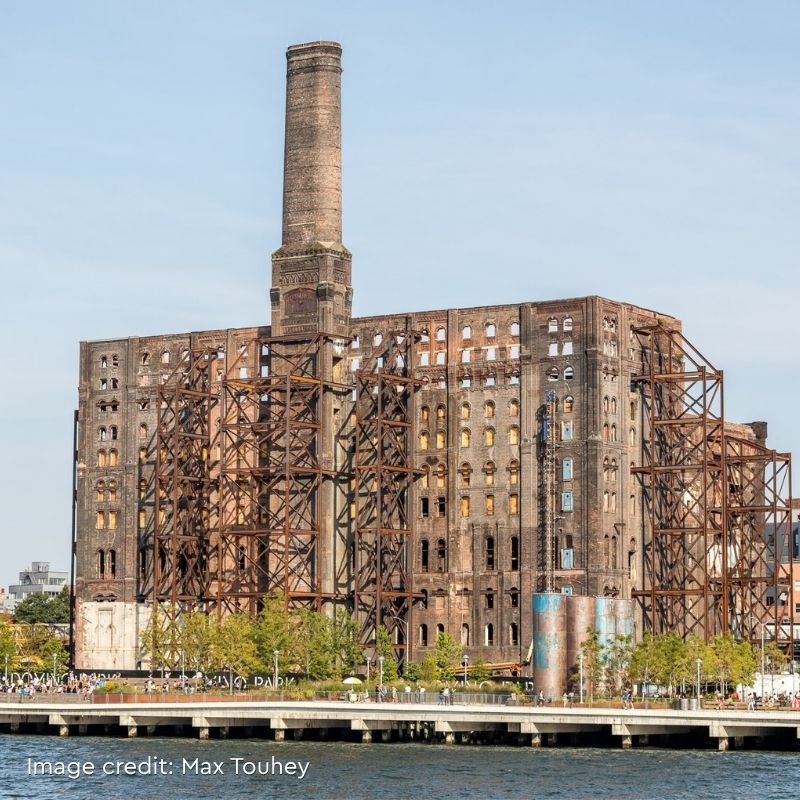
Originally constructed in 1856, the Domino Sugar Refinery operated as a large-scale industrial sugar processing facility for decades. Over time, the structure evolved into a landmark of Brooklyn’s industrial heritage—never originally designed for human occupation in its current form.
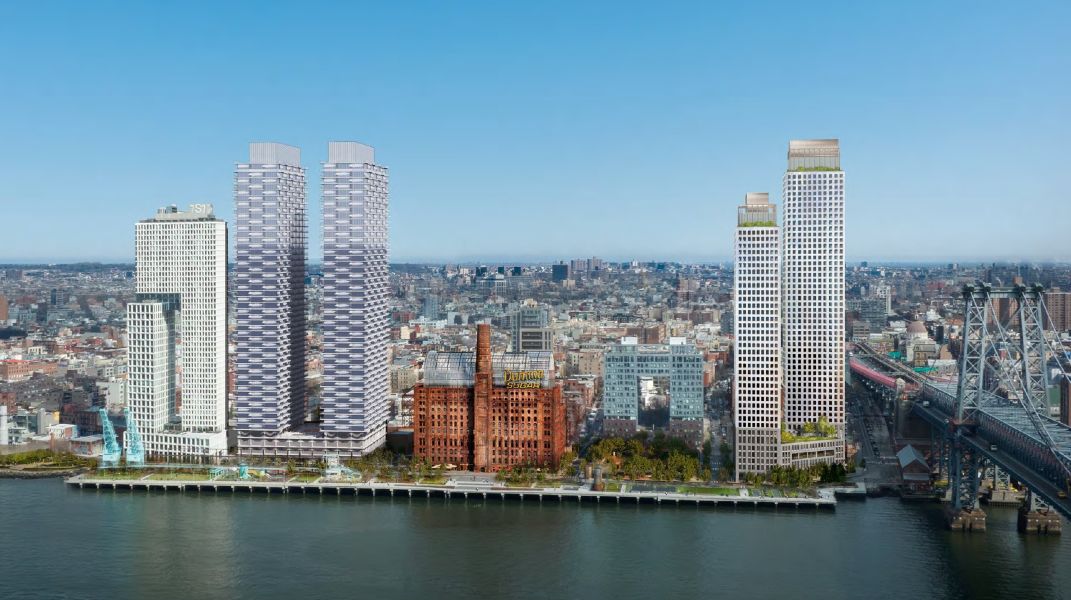
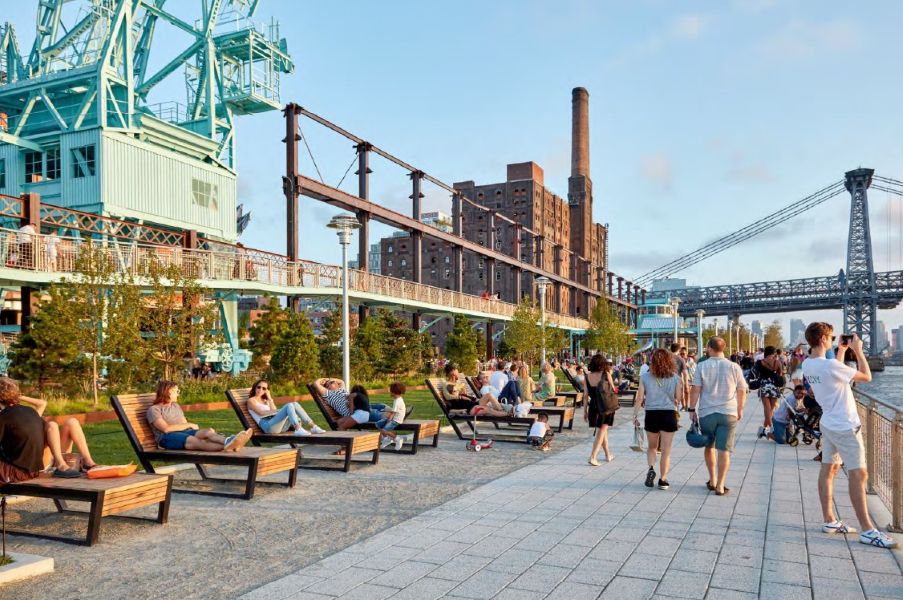
As part of the redevelopment led by Two Trees Management, the site has been reimagined into a modern mixed-use destination along the Williamsburg waterfront. The project comprises five buildings including office space, residential development, retail, and public realm enhancements, contributing to the ongoing reinvention of Brooklyn’s former shoreline.
The redevelopment presented a highly intricate regulatory and technical environment. Key challenges included:
- Adaptive reuse of a 19th-century industrial structure not originally designed for occupancy or modern building systems
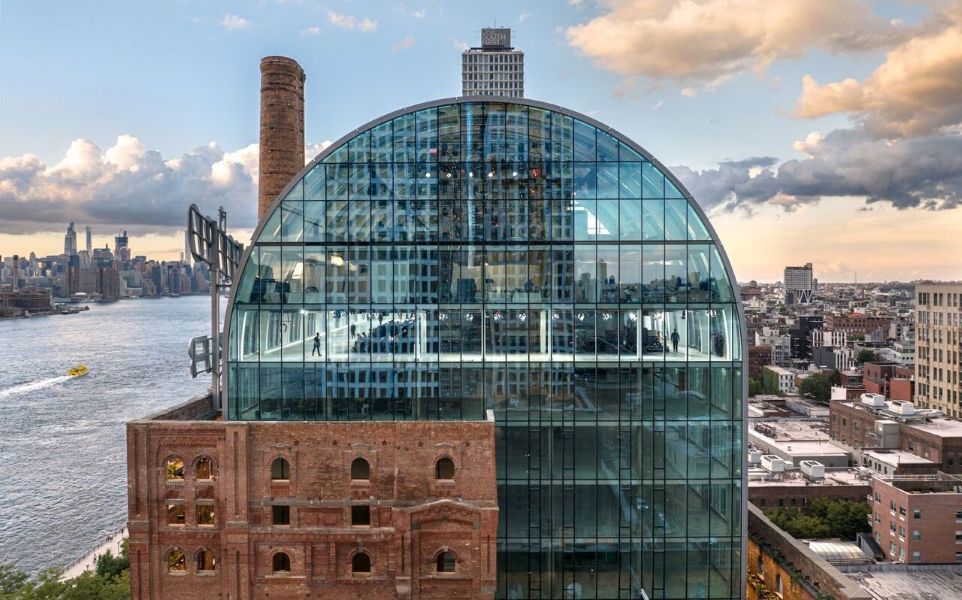
- Integration of a high-performance glass façade within four-foot-thick historic brick walls, creating unique energy modeling and compliance constraints
- Coordination across multiple filings, approvals, and phased construction activities across several addresses within the Domino campus
- Managing aggressive construction and occupancy sequencing, including early tenant move-ins and active construction above occupied floors
- Navigating complex DOB review cycles, LPC considerations, and multi-agency coordination
Originally constructed in 1856, the Domino Sugar Refinery operated as a large-scale industrial sugar processing facility for decades. Over time, the structure evolved into a landmark of Brooklyn’s industrial heritage—never originally designed for human occupation in its current form.
As part of the redevelopment led by Two Trees Management, the site has been reimagined into a modern mixed-use destination along the Williamsburg waterfront. The project comprises five buildings including office space, residential development, retail, and public realm enhancements, contributing to the ongoing reinvention of Brooklyn’s former shoreline.
The redevelopment presented a highly intricate regulatory and technical environment. Key challenges included:
- Adaptive reuse of a 19th-century industrial structure not originally designed for occupancy or modern building systems
- Integration of a high-performance glass façade within four-foot-thick historic brick walls, creating unique energy modeling and compliance constraints
- Coordination across multiple filings, approvals, and phased construction activities across several addresses within the Domino campus
- Managing aggressive construction and occupancy sequencing, including early tenant move-ins and active construction above occupied floors
- Navigating complex DOB review cycles, LPC considerations, and multi-agency coordination
Code Consulting, Filing Representation, and DOB Strategy
The Results
A Certificate of Occupancy for a Complex Redevelopment
SOCOTEC’s involvement helped support the successful progression of one of Brooklyn’s most ambitious redevelopment programs, contributing to:
- Regulatory clarity across multiple overlapping DOB filings
- Successful coordination of phased occupancy strategies, including TCO pathways
- Improved alignment between design intent and code compliance requirements
- Streamlined communication between ownership, design teams, and city agencies
- Cost efficiencies achieved through filing coordination and DOB audit support
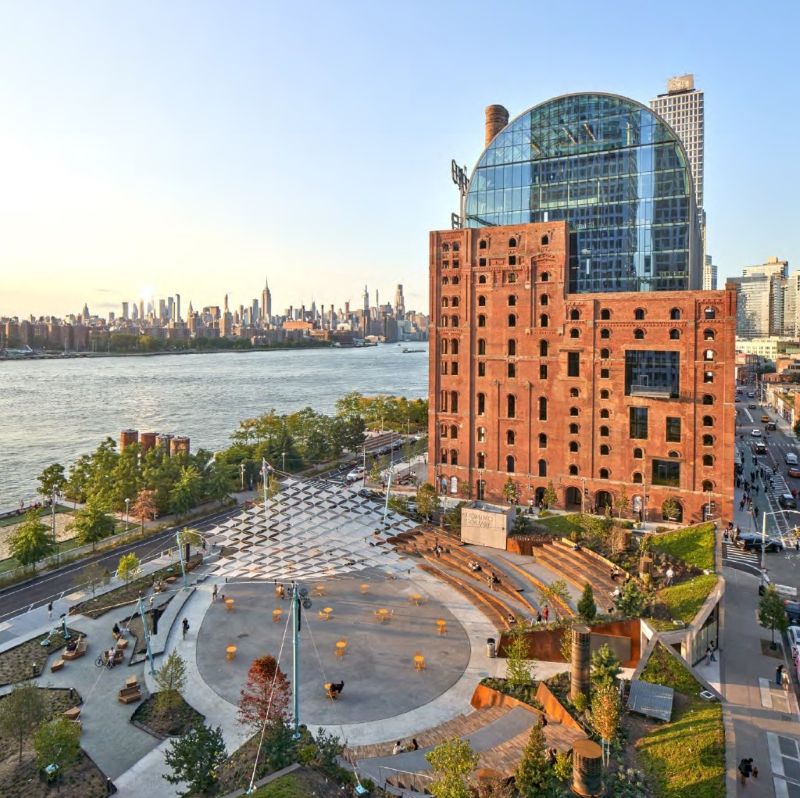
The Domino Refinery now stands as a benchmark for adaptive reuse in New York City—balancing preservation, innovation, and regulatory precision within one of the city’s most visible waterfront redevelopments.
Our role across the Domino campus demonstrates how integrated filing representation, expediting consulting, and building code consulting can reduce risk, accelerate approvals, and support successful delivery in highly regulated environments.

Looking for a building code consultant or expediting partner in New York?

