

Facade Inspection & Safety Program (FISP)
New York City
Stay compliant with NYC's Local Law 11 (FISP) requirements. SOCOTEC provides expert facade inspections and repairs for buildings over 6 stories across all five boroughs.
What is Facade Inspection & Safety Program (FISP)?
New York City’s Facade Inspection Safety Program (FISP) is a critical regulation designed to protect public safety through mandatory inspections of building facades. Required for all buildings over six stories across the five boroughs, FISP ensures that exterior walls and appurtenances are regularly assessed for structural integrity. These inspections must be conducted by a licensed Professional Engineer or Registered Architect and include both visual reviews and hands-on examinations of facades facing public rights-of-way. With increasingly stringent requirements introduced in each cycle, property owners must remain vigilant in meeting these obligations to avoid serious safety risks and legal penalties.
At SOCOTEC, we bring decades of experience and specialized technical expertise to help building owners navigate every aspect of FISP compliance. Our certified Qualified Exterior Wall Inspectors (QEWIs), engineers, and architects provide thorough inspections, reporting, and follow-up services tailored to your building’s unique needs. We support our clients through every phase, from initial evaluation and DOB filing to repair planning and long-term facade strategies, ensuring not only regulatory compliance, but also the protection

Talk to our experts


Understanding FISP
Facade Inspection Requirements in NYC
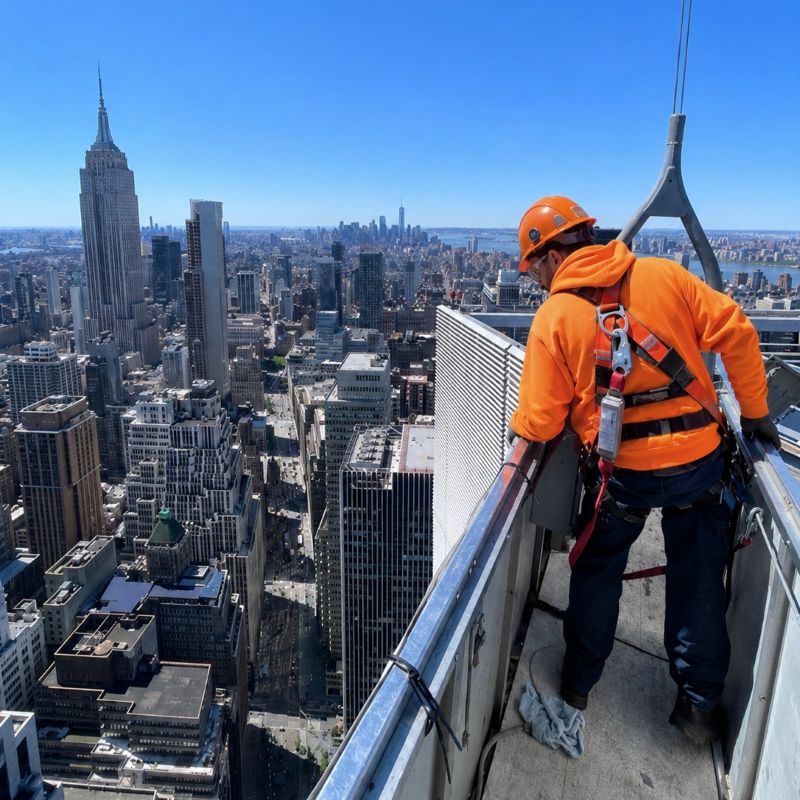
Under FISP, a Qualified Exterior Wall Inspector (QEWI)—a licensed Professional Engineer or Registered Architect—must perform a comprehensive visual and physical examination of the building's envelope.
Visual inspections include all exterior walls and appurtenances, such as:
- Exterior fixtures
- Flagpoles and signage
- Parapets, copings, guardrails, and railings
- Window frames and hardware
- Balcony enclosures, window guards, air conditioning units
- Flower boxes and any attachments or projections from the façade
Physical inspections involve hands-on examinations of facades facing a public right-of-way. These must be conducted at intervals of 60 feet, from the roof to street level.
FISP Classifications
Following inspection, building conditions are classified into one of three categories:
FISP Sub-Cycles
The buildings subject to FISP in New York are grouped into three Cycles: A, B, and C. A building’s filing window is determined by its Sub-Cycle, which is based on the last digit of the building’s block number. The three Sub-Cycles are as follows:
Cycle 10

Key Changes in Cycle 10
There are important updates to be aware of in Cycle 10:
Minimum number of physical inspections now based on linear feet of facade along public right-of-way
Probes required for buildings with cavity wall construction (odd-numbered cycles only)
Stricter QEWI qualification standards
Higher DOB penalties for late filings or unsafe conditions
History of FISP: From Local Law 10 to Cycle 10
FISP originated from Local Law 10 of 1980, following the death of Grace Gold, a Barnard student fatally injured by falling masonry. Over the decades, the law has evolved in response to continued safety concerns:
Local Law 11 of 1998: Introduced stricter inspection requirements
2010, Cycle 7: Renamed to FISP and included mandatory inspections of balconies, guardrails, and fire escapes
Cycle 9: Expanded hands-on inspections to every 60 feet and added probes for buildings with cavity wall construction
Cycle 10: Further increases in inspection frequency, qualifications for QEWIs, and penalties for non-compliance
Three Reasons FISP is Important for Existing Buildings:

Safety
FISP was created due to the need for an increased focus on public safety in New York City. As one of the most densely populated cities in the world with some of the tallest skyscrapers and number of buildings, we experience tragedy every few years due to falling material and structurally unsound building facades. FISP helps mitigate these events.
Legal Obligation
It's the Law. Owners of buildings greater than six stories must submit reports every five-year cycle, and they have a two-year window to file according to their Sub-Cycle assignment. If SWARMP items are identified, Owners are required by law to address those repairs before the next filing cycle.
Strategic Opportunity
Although costlier, the cost-benefit of a deep retrofit is undeniable. The facade can be replaced and enhanced, mechanical systems can be upgraded, and higher energy efficiency can be considered. SOCOTEC can also provide evaluations for compliance with meeting the new carbon emissions requirements, per Intro. 1253-C/Local Law 97.
NYC Facade Inspections Services
FISP Experts in New York
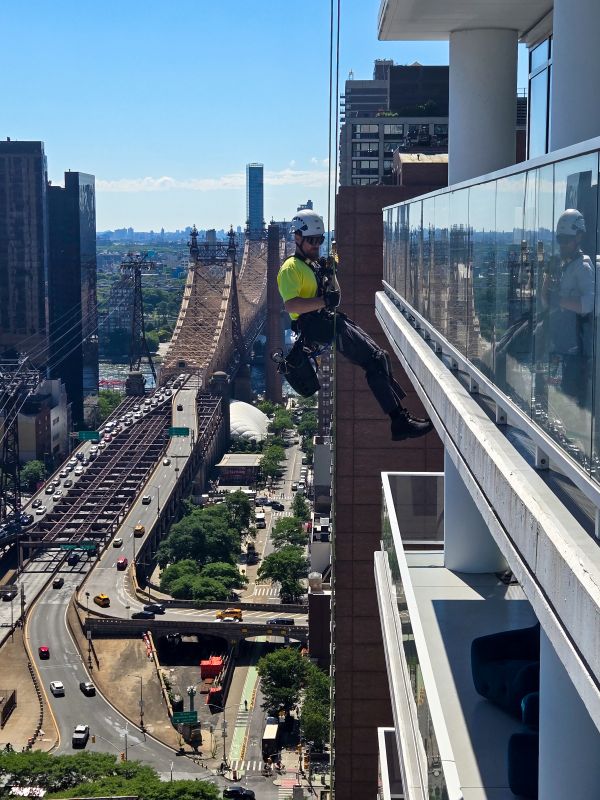
It is required and imperative that a building’s inspection be performed under the direction of a QEWI. SOCOTEC has specialized in building envelope technology for more than a quarter century, with licensed Professional Engineers and Registered Architects in the New York office, as well as a certified QEWI that oversees all facade inspection projects.
SOCOTEC has performed hundreds FISP inspection services on behalf of property owners and managers. The most respected names in real estate rely upon our team’s expert judgment calls, and our advice and relationships are, and have always been, focused on the long term. We also offer DOB expediting services, and have on staff the former commissioner of the DOB who heads of our Code Advisory team.
Our team can both administer the FISP inspection and provide long-term solutions. If a building is determined as ‘SWARMP’ or ‘Unsafe’ it may suggest an underlying issue that could be costly. As an experienced building envelope consultancy, among other areas (sustainability, energy efficiency, code advisory and construction advisory), we are able to provide a holistic strategy and a proposed budget for those potential issues.
Industrial Rope Access
SOCOTEC provides Industrial Rope Access SPRAT-certified inspectors in addition to our seasoned Project Managers. FISP inspections by rope access are becoming increasingly more efficient and economical, especially as the FISP amendments become more stringent and require more hands-on examinations. Inspections via rope access are equally as thorough, but are often performed faster than by other methods of inspection, and in effect become a more cost-effective alternative.
Drone Building Facade Inspections
SOCOTEC provides drone-based façade inspections to support compliance with the Facade Inspection & Safety Program (FISP). Using UAV technology, our experts capture high-resolution imagery of exterior walls to assess material degradation, cracks, spalling, delamination, water infiltration, mortar joint deterioration, and coating or sealant failures.
Drone inspections allow our teams to safely access hard-to-reach areas while reducing the need for extensive scaffolding or manual access. This approach supports accurate condition assessments, improves field safety, and helps building owners plan maintenance and repairs more efficiently.

Want to know more bout our Facade Inspection Safety Program (FISP) services?
Talk to our experts

