
Author

Geotechnical Engineering for Mining Projects: Reducing Risk from Design to Closure
Wed 07/29/2026 - 16:17
Geotechnical Engineering for Mining Projects: Reducing Risk from Design to Closure
Geotechnical engineering is the foundation of every project.
Every mining project is built on assumptions about the ground beneath it. When those assumptions are wrong, projects can experience costly redesigns, construction delays, safety concerns, and millions of dollars in unexpected expenses. Geotechnical engineering reduces that uncertainty by providing the information needed to design, construct, and operate mining infrastructure with confidence.
Key Takeaways
- Geotechnical engineering informs the design of nearly every mining asset, from processing plants and crusher foundations to haul roads, heap leach facilities, and Tailings Storage Facilities (TSFs).
- Early investigation reduces geotechnical risk, improve constructability, minimizing costly redesigns and construction delays.
- Geotechnical support continues throughout the mine lifecycle — from feasibility studies through closure.
- Construction quality assurance (QA/QC) verifies that engineering recommendations are correctly implemented in the field.
- A multidisciplinary approach, combining engineering, testing, and inspection, streamlines mining project delivery and improves long-term asset performance.


Geotechnical Investigations
Why Geotechnical Engineering Matters on Mining Projects
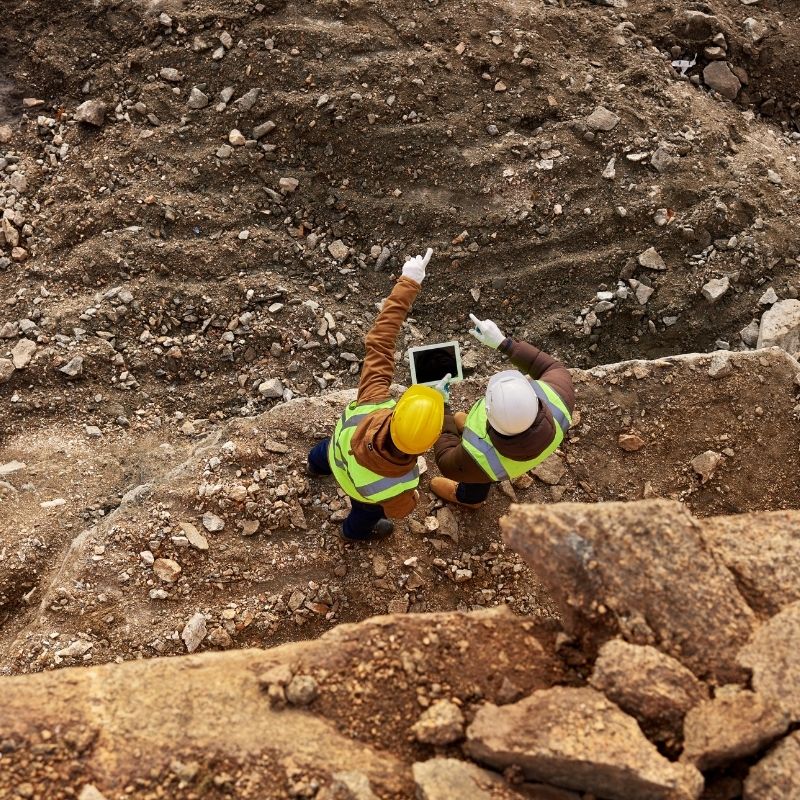
Mining projects demand substantial capital investment, and every planning decision affects safety, constructability, schedules, and long-term performance. While processing facilities and production targets often draw the most attention, the success of any mining operation starts underground, with a clear understanding of the ground conditions that will support it.
Every mine site presents unique geological and geotechnical challenges. Variations in soil conditions, rock quality, groundwater, seismic hazards, and geologic structure can all influence design, construction methods, and long-term infrastructure performance.
A comprehensive geotechnical investigation typically includes:
- Geotechnical drilling and sampling
- Engineering geology mapping
- Rock mass characterization
- Groundwater investigations
- Laboratory testing of soil and rock
- Geophysical investigations, where appropriate
Geotechnical engineering recommendations influence decisions such as whether a crusher requires deep foundations or spread footings, how much over-excavation is necessary beneath a process plant, whether a haul road requires subgrade stabilization, or whether a TSF foundation requires ground improvement before construction.
Mining projects demand substantial capital investment, and every planning decision affects safety, constructability, schedules, and long-term performance. While processing facilities and production targets often draw the most attention, the success of any mining operation starts underground, with a clear understanding of the ground conditions that will support it.
Every mine site presents unique geological and geotechnical challenges. Variations in soil conditions, rock quality, groundwater, seismic hazards, and geologic structure can all influence design, construction methods, and long-term infrastructure performance.
A comprehensive geotechnical investigation typically includes:
- Geotechnical drilling and sampling
- Engineering geology mapping
- Rock mass characterization
- Groundwater investigations
- Laboratory testing of soil and rock
- Geophysical investigations, where appropriate
Geotechnical engineering recommendations influence decisions such as whether a crusher requires deep foundations or spread footings, how much over-excavation is necessary beneath a process plant, whether a haul road requires subgrade stabilization, or whether a TSF foundation requires ground improvement before construction.
Geotechnical Engineering Reduces Risk Before Construction Begins
Because no two mine sites are alike, understanding subsurface conditions before construction begins is one of the most important steps in reducing project risk. Unexpected subsurface conditions are among the most preventable causes of delays and cost overruns on a mine site. Identifying geotechnical risks during planning gives engineering teams time to develop practical solutions before construction activities begin.
Engineering evaluations commonly performed during this phase include:
- Slope stability analyses
- Settlement evaluations
- Liquefaction assessments
- Seismic hazard evaluations
- Foundation recommendations
- Ground improvement evaluations
These analyses help optimize foundation systems, grading plans, excavation sequencing, and earthwork design, while directly improving constructability and reducing the likelihood of unforeseen field conditions, including localized mass movements.
For mine owners, investing in geotechnical services early is ultimately an investment in risk management, providing greater confidence in budgets, schedules, and long-term asset performance.
Ground conditions rarely become simpler once construction begins. Mines that treat geotechnical investigations as a formality often pay for it twice—first through redesign costs and then through schedule delays.
QA/QC for Mining
Construction Quality Assurance for Mining Projects
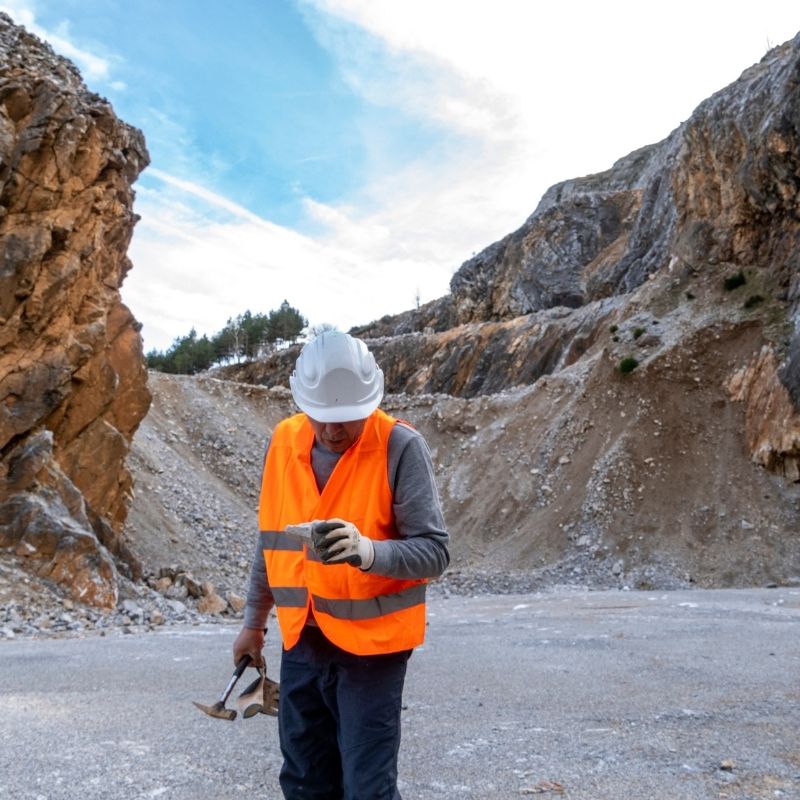
The value of geotechnical engineering extends well beyond the design phase. Once construction starts, engineering recommendations must be verified through comprehensive quality assurance (QA) and quality control (QC) services to confirm that infrastructure is being built to specification.
Construction quality assurance for mining projects typically includes:
- Soil compaction testing
- Concrete, aggregate, and asphalt testing
- Structural steel inspection
- Deep foundation inspection
- Earthwork observation
- Nondestructive testing (NDT) and laboratory material verification
The value of geotechnical engineering extends well beyond the design phase. Once construction starts, engineering recommendations must be verified through comprehensive quality assurance (QA) and quality control (QC) services to confirm that infrastructure is being built to specification.
Construction quality assurance for mining projects typically includes:
- Soil compaction testing
- Concrete, aggregate, and asphalt testing
- Structural steel inspection
- Deep foundation inspection
- Earthwork observation
- Nondestructive testing (NDT) and laboratory material verification
Drawings don't build mines—people do. QA/QC provides the critical link between engineering design and construction, ensuring that what is built in the field reflects the intent behind the design.
These services confirm that engineered assumptions are successfully implemented on site, reducing the risk of rework, delays, and premature infrastructure failure. Integrating geotechnical engineering with construction materials testing and inspection helps project teams maintain continuity from initial design through project completion.
Geotechnical Engineering Throughout the Mining Lifecycle
Ground conditions continue to influence mining operations long after construction ends. Facility expansions, infrastructure upgrades, TSF modifications, and mine closure activities all rely on sound geotechnical engineering and ongoing technical support.
Geotechnical risk doesn't disappear once a mine reaches full production; it evolves. Monitoring programs, including blasting vibration monitoring and periodic slope and structural inspections, help operators identify emerging issues before they become costly problems.
Geotechnical Services for Mining
SOCOTEC's Geotechnical Expertise for the Mining Industry
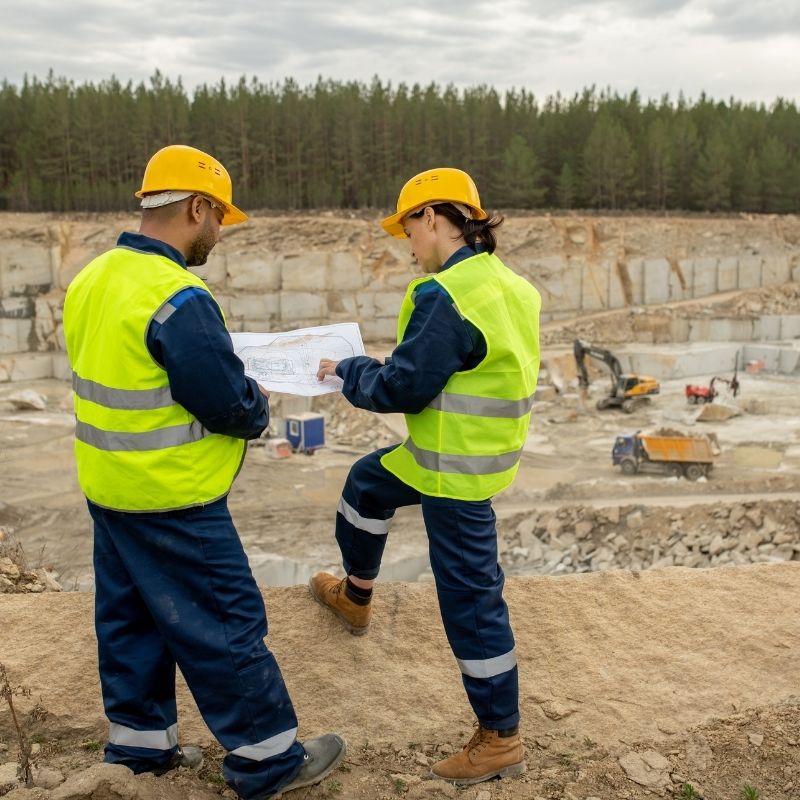
SOCOTEC provides multidisciplinary engineering, testing, inspection, and consulting services across every stage of the mining lifecycle. Our team of geotechnical engineers supports mine owners, Engineering, Procurement and Construction (EPC) firms, and contractors across mining regions such as Arizona, Nevada and Texas, with services including:
- Geotechnical engineering and engineering geology
- Construction materials testing and QA/QC
- Tailings storage facility (TSF) support
- Geophysical and hydrogeologic services
- Environmental engineering and permitting support
- Structural inspections and nondestructive testing (NDT)
- Blasting vibration monitoring
- Construction observation and laboratory testing
By integrating these disciplines under one multidisciplinary team, SOCOTEC delivers consistent technical support from exploration and feasibility studies through construction, operations, expansion, and reclamation, helping clients reduce risk and improve construction quality at every stage.
SOCOTEC provides multidisciplinary engineering, testing, inspection, and consulting services across every stage of the mining lifecycle. Our team of geotechnical engineers supports mine owners, Engineering, Procurement and Construction (EPC) firms, and contractors across mining regions such as Arizona, Nevada and Texas, with services including:
- Geotechnical engineering and engineering geology
- Construction materials testing and QA/QC
- Tailings storage facility (TSF) support
- Geophysical and hydrogeologic services
- Environmental engineering and permitting support
- Structural inspections and nondestructive testing (NDT)
- Blasting vibration monitoring
- Construction observation and laboratory testing
By integrating these disciplines under one multidisciplinary team, SOCOTEC delivers consistent technical support from exploration and feasibility studies through construction, operations, expansion, and reclamation, helping clients reduce risk and improve construction quality at every stage.
Conclusion
Every successful mining project begins with a thorough understanding of the ground it is built upon. From exploration and feasibility studies through construction, operations, and closure, geotechnical engineering provides the technical insight needed to reduce uncertainty and make informed decisions.
Combined with rigorous construction quality assurance, these services help ensure that mining infrastructure is built as designed—improving constructability, protecting capital investments, and supporting safe, reliable performance for decades to come.
At SOCOTEC, we believe geotechnical engineering is more than a design discipline. It's a risk management strategy. By integrating engineering, testing, inspection, and laboratory services under one multidisciplinary team, we help mine owners, EPC contractors, and engineering firms deliver projects with greater confidence, higher quality, and long-term success.
Ready to Reduce Geotechnical Risk on Your Next Mining Project?
You may also like

Get the latest updates about SOCOTEC, subscribe to our newsletter!