Stack Study at a Power Plant
SOCOTEC conducted a CFD modeling to identify how a 500ft stack could be modified to increase the performance of the boilers and turbines it serves.
Key Information
- Project: Stack Study at a Power Plant
- Client: Confidential
- Services provided: Computational Fluid Dynamics (CFD) modeling, Design adaptation, and Cost estimation
The Challenge
Managing Stack Back Pressure
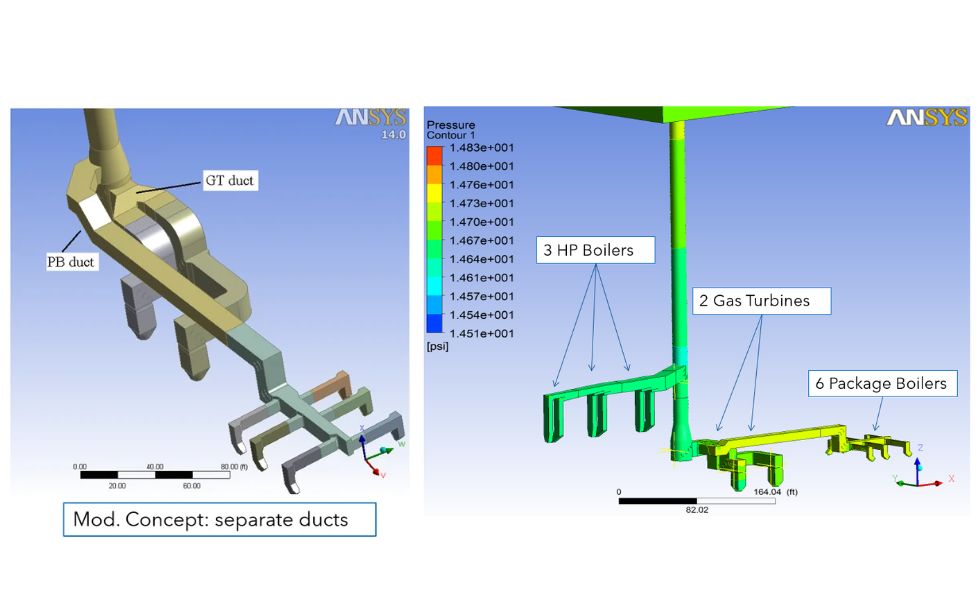
The project focused on a 500-foot stack serving multiple boilers and turbines at a power plant facility. Large duct connections at the base of the stack created a complex flow configuration that required detailed engineering analysis.
The performance of the connected units was limited by stack back pressure, which affected the facility’s ability to achieve higher operating performance.
To improve output, our client needed an engineering assessment to evaluate the existing system, establish its performance envelope, and determine which design changes could increase performance. The study also needed to provide cost estimates to support the evaluation of potential modifications.

Talk to our experts

The Solution
CFD Modeling with ANSYS CFX
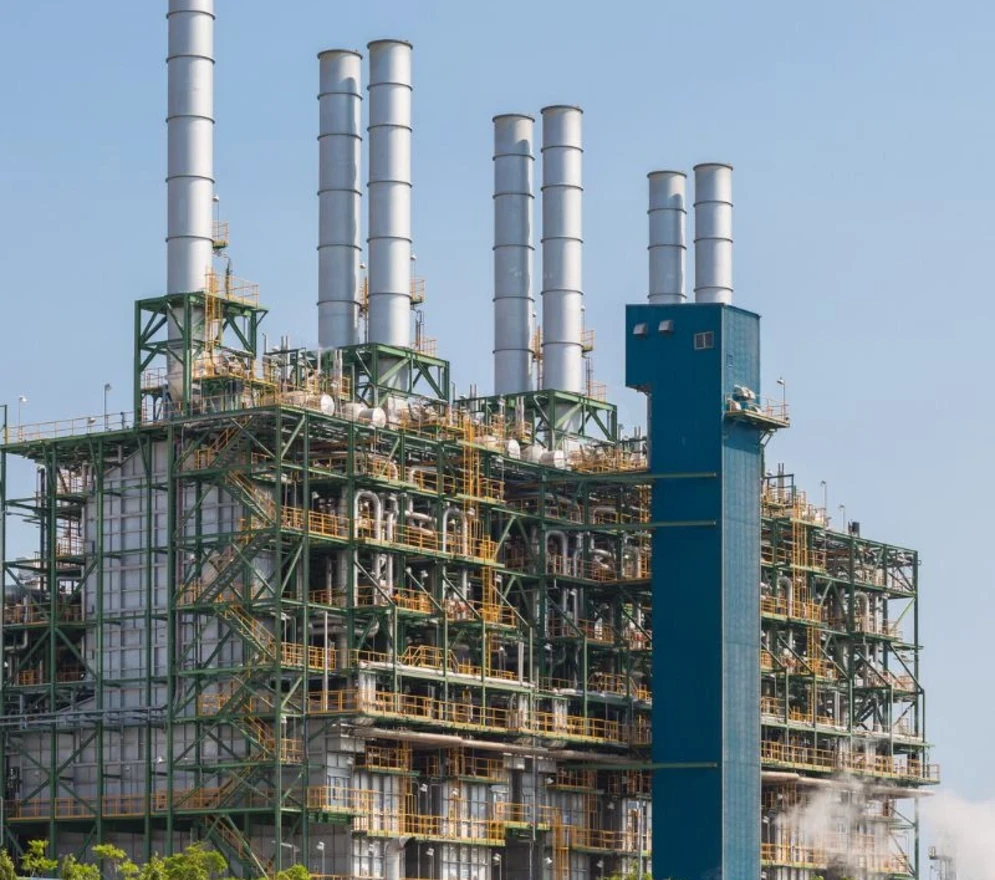
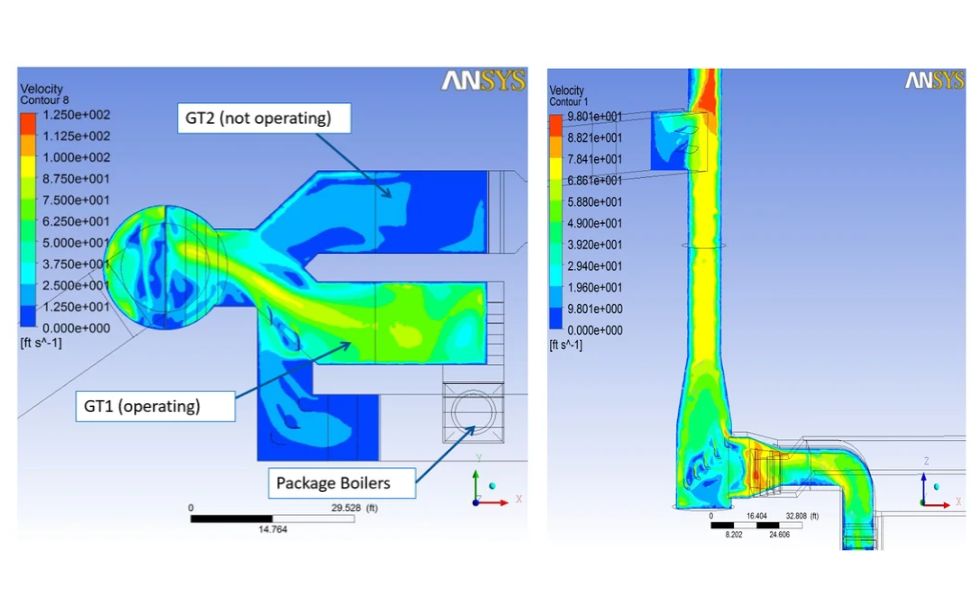
SOCOTEC developed an ANSYS CFX model to analyze the stack system and evaluate potential design improvements. The model was benchmarked against test data to assess its alignment with measured performance and provide a basis for further engineering analysis.
The study included several key activities:
- Computational Fluid Dynamics modeling: Developed an ANSYS CFX model of the 500-foot stack and its connections to multiple boilers and turbines.
- Model benchmarking: Compared model results with test data to establish a reference for evaluating system performance.
- Performance envelope assessment: Determined the performance envelope of the existing configuration to better understand the system’s operating limitations.
- Design modification analysis: Evaluated five design modifications to identify opportunities to increase equipment performance by addressing stack-related constraints.
- Cost estimation: Provided cost estimates for the proposed modifications to support the client’s evaluation of potential improvements.
The Results
Increased Performance With New Gas Turbine Stacks
The study showed that performance increased with new gas turbine (GT) stacks. SOCOTEC also provided cost estimates, giving the client additional information to consider when evaluating the proposed changes. Together, the performance analysis and cost information supported a more informed assessment of the available design options.
For complex engineering projects, this type of study can help clarify how interconnected systems influence equipment performance. Modeling and engineering analysis provide a way to investigate design alternatives, assess potential benefits, and support decisions with technical evidence rather than relying on assumptions alone.

For decades, SOCOTEC has helped power facilities across the US improve system performance through advanced engineering, testing and advisory services, including CFD, FEM and other simulation tools.
Planning performance improvements at your nuclear facility?