certified passive house consultants

Passive House

SOCOTEC’s Certified Passive House Consultants and Designers guide owners, architects, and builders through high-performance design and certification in the Northeast (New York and Massachusetts).

As building codes tighten and decarbonization targets accelerate, working with experienced Passive House consultants has become essential to achieving energy performance, compliance, and long-term value.

Whether you're planning a multifamily development in New York City, a commercial project in Boston, or residential construction in Connecticut, our CPHD and CPHC-certified professionals provide clear guidance and technical oversight at every stage of the project.

background dark blue

Talk to our experts

Andrew Graceffa Director, Energy Services Vidaris a SOCOTEC Company

Andrew GRACEFFA

Principal

Principal

andrew.graceffa@socotec.us +1 212 689 5389
Lama BITAR, Senior Consultant in Energy at SOCOTEC Charlestown

Lama Bitar

Senior Consultant

Senior Consultant

lama.bitar@socotec.us +1 617 464 6931

Why Choose SOCOTEC as a Passive House Firm

decorative yellow quote

Certified Experts

Our CPHC and CPHD professionals, PHIUS Verifiers, HERS Raters, envelope consultants, and energy specialists ensure your project meets passive house standards.

decorative yellow quote

Cost and Value Optimization

We focus on practical solutions to help passive house builders achieve certification goals while maintaining project budgets. 

decorative yellow quote

Proven Track Record

At SOCOTEC, we combine national expertise with local market knowledge across the East Coast and have successfully delivered Passive House projects in Boston and New York.

decorative yellow quote

Clear Communication

We work seamlessly with your with architects, builders, and owners, providing transparent guidance, clear feedback and actionable recommendations. 

Our Passive House Consulting Services

As a leading passive house consultant firm, SOCOTEC provides end-to-end passive house consultation, supporting projects from early feasibility through certification and construction verification in Massachusetts, Connecticut, New York, and New Jersey. 
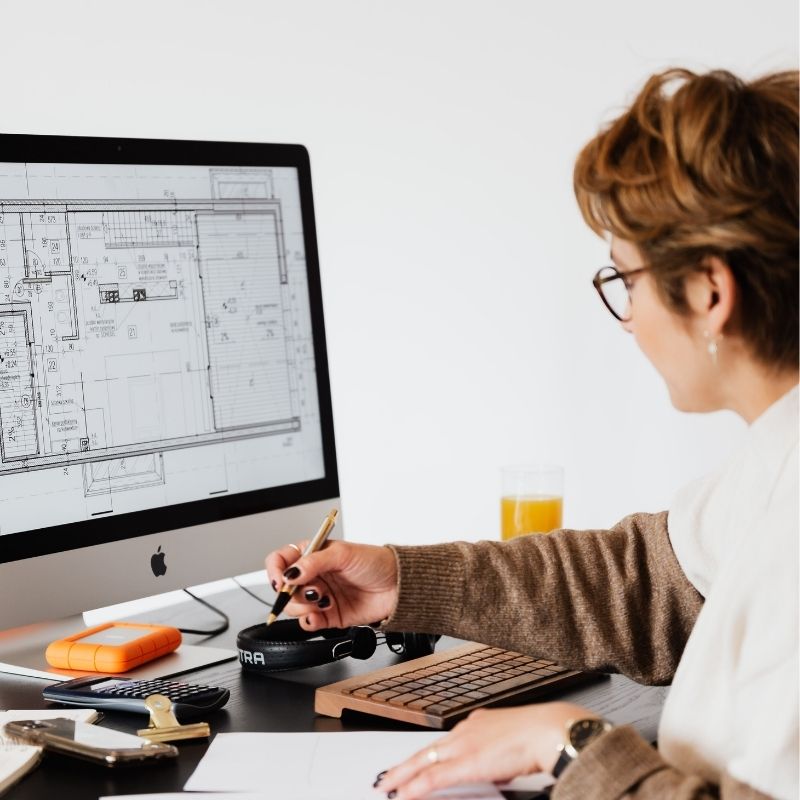
  • Initial feasibility studies and design target setting
  • Whole-building WUFI Passive/PHPP energy modeling
  • Thermal bridge analysis and mitigation strategies
  • Moisture control design reviews
  • HVAC system optimization for heating and cooling efficiency
  • Passive house architect and builder coordination

  • PHIUS certification and CPHC guidance
  • Passivhaus certification through PHI standards
  • CPHD certification support for design professionals
  • Documentation preparation and submission
  • Third-party verification coordination

  • On-site verification by certified passive house consultants
  • Blower door testing and air leakage diagnostics
  • Quality assurance inspections
  • Contractor training and support
  • Commissioning of ventilation and mechanical systems

  • MassSave utility incentive facilitation
  • Inflation Reduction Act (IRA) tax credit/deduction documentation
  • Cost-benefit analysis and value engineering
  • Hard and soft cost reduction strategies

certified passive house designer

What Is a Passive House?

Passive House—also known as Passivhaus—is a rigorous, performance-based building standard developed to reduce energy use while improving occupant comfort and durability

Passive House can be applied to any building type or size, from single-family homes to large multifamily and commercial developments.

What Are the Passive House Principles?

Rather than relying on complex mechanical systems, a Passive House focuses on optimizing the building envelope and core systems to reduce energy demand at its source. The 5 key Passive House design principles include:

  1. Continuous high-performance insulation to limit heat loss and improve energy efficiency
  2. Airtight construction to enhance comfort, control air leakage, and protect the building enclosure
  3. High-performance windows and doors designed to balance solar gains and thermal comfort
  4. Thermal bridge mitigation across walls, roofs, and foundations to ensure consistent performance
  5. Balanced ventilation with heat recovery to deliver fresh air, manage humidity, and reduce heating and cooling loads

These principles allow architects, engineers, and builders to improve energy performance and occupant comfort.

Passive House Massachusetts

decorative yellow quote

Passive House Consultation in Boston 

  • In Massachusetts, any building of any size or program type can pursue Passive House under the Mass Stretch Code.
  • Any multifamily building over 12,000 SF is required to follow Passive House under the Mass Stretch Opt-In Code.

SOCOTEC helps Passive House projects achieve peak energy performance and certification in Boston and across Massachusetts. We also support companies with compliance under the Stretch Energy Code and BERDO regulations.

Passive House New York

decorative yellow quote

Passive House Consultant in NYC

  • In New York State, Passive House can apply to almost any building type, but it is most commonly pursued for residential, multifamily, and commercial projects

We help NYC projects navigate state and local requirements while achieving Passive House certification. Our experts ensure compliance with the Energy Conservation Construction Code of New York State (ECCCNYS) and help projects align with Local Law 97.
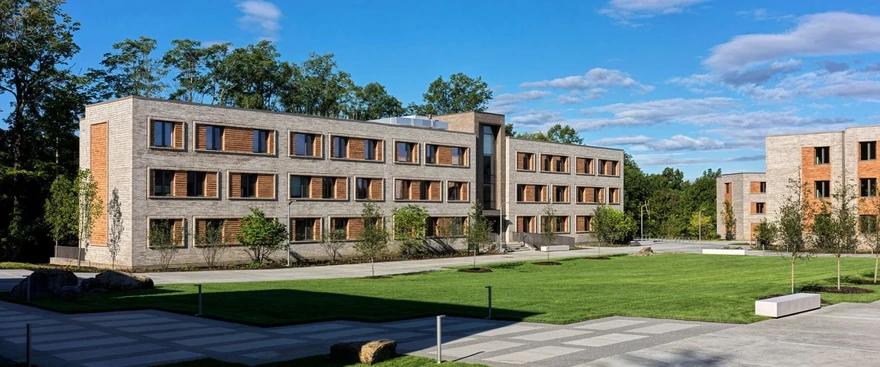
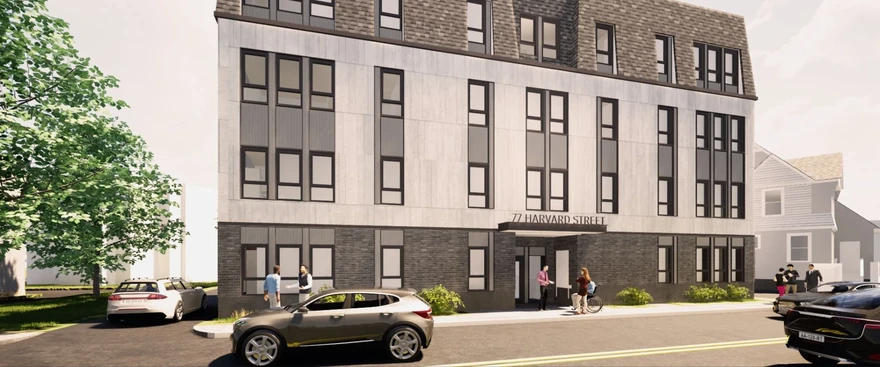
Our Passive House Projects

  • decorative yellow quote

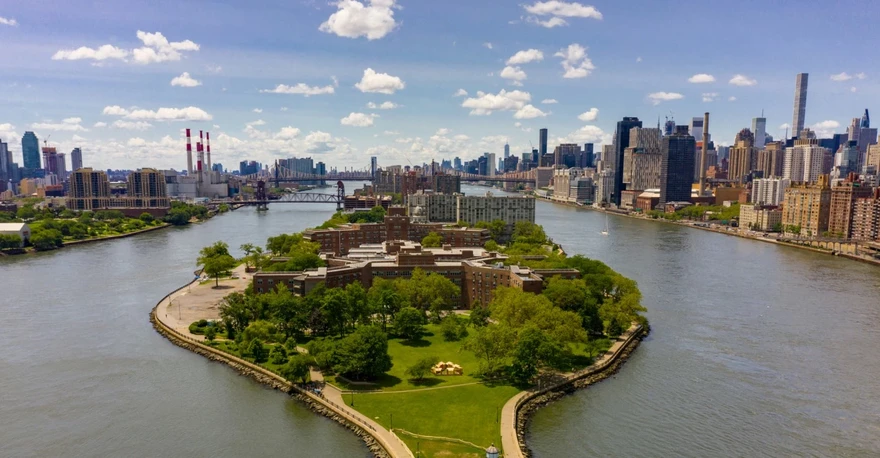
    The House at Cornell Tech, NY

    Read +
  • decorative yellow quote

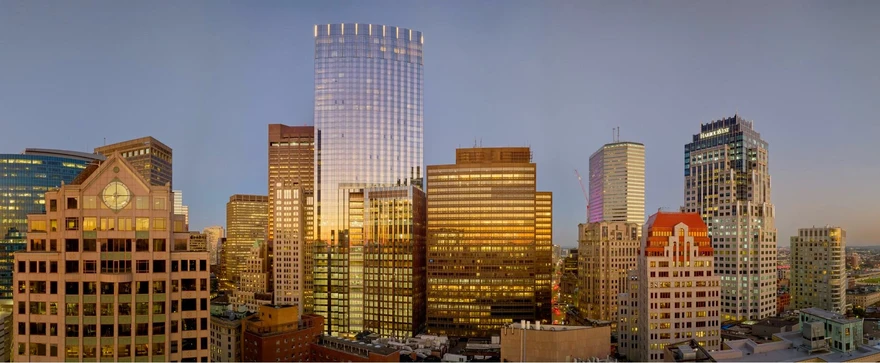
    Winthrop Center - Boston, MA - Largest Passive House Office Building in the World

    Read +
01/05

Find a Passive House Consultant

Ask for a Passive House consultation with our dedicated teams in New York and Massachusetts.

FAQ - Passive House Consulting and Certification

Passive house benefits include:

  • Significantly reduced energy use for heating and cooling (75-90% reduction)
  • Consistent indoor comfort with stable temperatures year-round
  • Improved indoor air quality through balanced, filtered ventilation
  • Lower operating costs over the building’s lifecycle
  • Smaller, more efficient HVAC systems
  • Enhanced building durability due to controlled air and moisture movement
  • Reduced carbon emissions and support for decarbonization goals
  • Strong resilience during power outages and extreme weather
  • Increased property value and marketability

A CPHC is a certified professional qualified to optimize and deliver buildings that meet rigorous Passive House performance standards, through practical design guidance, energy modeling, and certification support. CPHC certification is issued through recognized Passive House organizations and is widely accepted for Passive House and PHIUS certification pathways.

SOCOTEC has CPHC-certified consultants who provide practical design guidance, energy modeling, and certification support to help project teams achieve high-performance, compliant, and cost-effective Passive House buildings.

CPHDs are design professionals, typically architects or designers, trained to integrate Passive House principles directly into building design. They focus on envelope performance, system coordination, and energy modeling to ensure Passive House targets are met from early design through construction.

At SOCOTEC, our team includes CPHD professionals who work closely with architects and engineers to deliver coordinated, high-performance Passive House projects.

Passive House certification is third-party verification that a building meets stringent energy performance criteria established by either PHIUS (Passive House Institute US) or PHI (Passive House Institute). Certification confirms the building achieves exceptional thermal performance, airtightness, and energy efficiency.

SOCOTEC supports the entire certification process, from early design guidance and energy modeling to on-site verification and final documentation, ensuring that performance targets are achieved efficiently and with confidence.

PHIUS offers climate-specific standards adapted for North American conditions, while PHI uses universal European standards. Most passive house consultant NYC and passive house Boston projects use PHIUS certification, which accounts for regional climate variations across the United States.

Passive House certification follows a structured, performance-driven process:

  1. Early design coordination with a certified Passive House consultant
  2. Energy and enclosure modeling to establish performance targets
  3. Detailed design review addressing insulation, windows, HVAC, and ventilation
  4. Construction-phase verification including airtightness testing
  5. Final documentation and certification review by the Passive House Institute or PHIUS

SOCOTEC’s PHI passive consultants and verifiers ensure that design intent translates into real-world performance.

Passive House buildings typically have lifespans exceeding 100 years due to superior building envelope construction, moisture control, and durability. The high-performance materials and careful detailing that meet Passive House standards contribute to exceptional longevity compared to conventional construction.

background dark blue

Talk to our experts

Andrew Graceffa Director, Energy Services Vidaris a SOCOTEC Company

Andrew GRACEFFA

Principal

Principal

andrew.graceffa@socotec.us +1 212 689 5389
Lama BITAR, Senior Consultant in Energy at SOCOTEC Charlestown

Lama Bitar

Senior Consultant

Senior Consultant

lama.bitar@socotec.us +1 617 464 6931