
Our BERDO Specialist

Boston's BERDO Regulations: What to Know for Compliance
Mon 06/15/2026 - 5:41 AM
Boston's BERDO Regulations: What to Know for Compliance
Understanding Boston BERDO compliance is essential for large commercial and multifamily building owners, as covered buildings must meet annual emissions standards starting in 2025 or 2030. Navigate compliance and avoid fines with guidance from SOCOTEC.
Boston’s BERDO (Building Emissions Reduction and Disclosure Ordinance) is one of the most ambitious municipal climate regulations in the United States. For building owners and property managers across Boston, failure to comply with BERDO can result in fines. As the City of Boston accelerates its decarbonization goals, large commercial and multifamily buildings are at the center of this regulatory shift.
With buildings accounting for nearly 70% of Boston’s greenhouse gas emissions, BERDO 2.0 introduces progressively stricter emissions standards that will reshape how buildings are designed, operated, and valued.


Evolution & Goals
What Is Boston's BERDO Regulation?
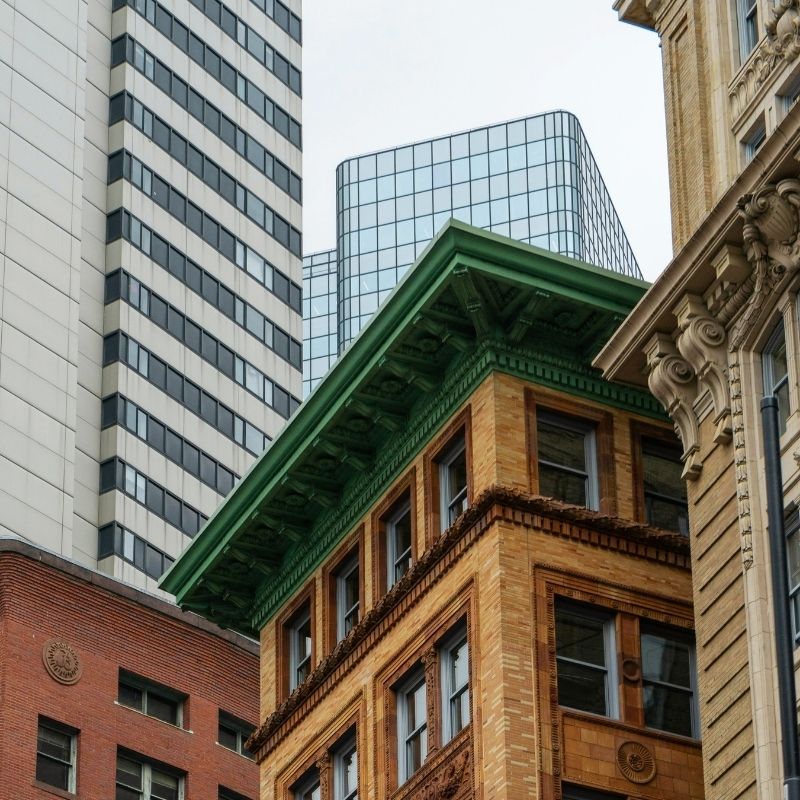
Introduced in 2013 and updated in BERDO 2.0, the Boston BERDO ordinance is a comprehensive climate policy requiring large buildings to track, report, and ultimately reduce their greenhouse gas emissions. Originally enacted as a disclosure-focused regulation, BERDO evolved significantly with amendments that transformed it into an emissions reduction mandate.
BERDO's Evolution
The City of Boston's BERDO initially focused on transparency, requiring building owners to annually report energy and water consumption data. This foundational phase established baseline emissions profiles across Boston's building stock.
BERDO 2.0, adopted in 2021, fundamentally changed the regulation's scope. The updated ordinance introduced:
- Mandatory emissions reduction targets aligned with Boston's 2050 carbon neutrality goal
- Five-year compliance periods with progressively stricter performance standards
- Independent third-party verification requirements for energy reports
- Financial penalties for non-compliance
- Public disclosure of building emissions performance data
The regulation targets building emissions reduction through a performance-based framework, allowing owners flexibility in choosing their decarbonization pathway while maintaining accountability for results.
Introduced in 2013 and updated in BERDO 2.0, the Boston BERDO ordinance is a comprehensive climate policy requiring large buildings to track, report, and ultimately reduce their greenhouse gas emissions. Originally enacted as a disclosure-focused regulation, BERDO evolved significantly with amendments that transformed it into an emissions reduction mandate.
BERDO's Evolution
The City of Boston's BERDO initially focused on transparency, requiring building owners to annually report energy and water consumption data. This foundational phase established baseline emissions profiles across Boston's building stock.
BERDO 2.0, adopted in 2021, fundamentally changed the regulation's scope. The updated ordinance introduced:
- Mandatory emissions reduction targets aligned with Boston's 2050 carbon neutrality goal
- Five-year compliance periods with progressively stricter performance standards
- Independent third-party verification requirements for energy reports
- Financial penalties for non-compliance
- Public disclosure of building emissions performance data
The regulation targets building emissions reduction through a performance-based framework, allowing owners flexibility in choosing their decarbonization pathway while maintaining accountability for results.
BERDO's Goals
Boston BERDO aims to achieve net-zero emissions in the building sector by 2050 through interim targets specific to each building use. In general:
- 2025-2029: First compliance period with baseline emissions standards
- 2030-2034: Emissions limits reduce by approximately 20%
- 2035-2039: Further reductions toward mid-century targets
- 2040-2044: Aggressive reductions approaching net-zero
- 2050: Full carbon neutrality achieved
These phased requirements provide building owners time to plan capital improvements while ensuring steady progress toward climate goals.
Owners who plan early can move beyond compliance and use BERDO as a framework to improve efficiency, manage risk, and protect long-term asset value.
Which Buildings Are Subject to BERDO?
Boston BERDO requirements apply to large buildings based on size thresholds:
BERDO Emissions Reporting & Performance Requirements
Compliance with Boston BERDO reporting involves multiple interconnected obligations that extend beyond simple data submission. SOCOTEC is an energy consultant that helps translate BERDO requirements into actionable compliance plans, including energy audits, building envelope analysis, decarbonization strategies, and third-party verification.
Annual Reporting to the City of Boston
Starting with BERDO 2022 reporting cycles, building owners must:
- Track monthly energy consumption across all fuel sources, including energy usage not reported by utilities (electricity, natural gas, fuel oil, propane, etc.)
- Monitor water consumption annually
- Request tenant data if energy is purchased directly by a tenant
- Submit reports through the city's online portal by May 15th annually
- Obtain third-party verification from credentialed professionals (PE, CEM, or equivalent), required for the first reporting year, first emissions compliance year, and every five years thereafter.
Performance Standards
BERDO compliance requires buildings to meet emissions intensity targets measured in kilograms of CO₂ equivalent per square foot. These targets:
- Vary by building type (office, retail, multifamily, etc.)
- Decrease every five years
- Apply penalties when actual emissions exceed allowed thresholds
Verification Requirements
Independent verification ensures data accuracy and credibility. Verifiers must:
- Review utility bills and consumption records
- Confirm building characteristics and square footage
- Confirm all energy usage is accurately reported, including use of backup generation and EV charging station usage to be exempt from emissions standards
- Confirm eligibility of any renewable energy credits (RECs) and power purchase agreements (PPAs)
- Certify report accuracy through professional seal
This third-party oversight increases reporting rigor and establishes reliable baseline data for Boston's climate tracking.
Emissions Calculation Tools
Many building owners are undertaking decarbonization projects to meet BERDO compliance. SOCOTEC can assist with decarbonization studies to help your buildings comply. In addition, the BERDO Emissions Calculator and Emissions Compliance Projection templates are tools that building owners can use for future emissions planning, helping building owners understand current emissions and how emissions may change over time under future projects.
- Electricity emissions decrease over time due to Massachusetts’ policy for a cleaner, more renewable grid
- Fossil fuel emissions apply standard combustion factors, reducing only through efficiency, electrification or fuel switching
Fine & Payment
What is the fine for BERDO in Boston?
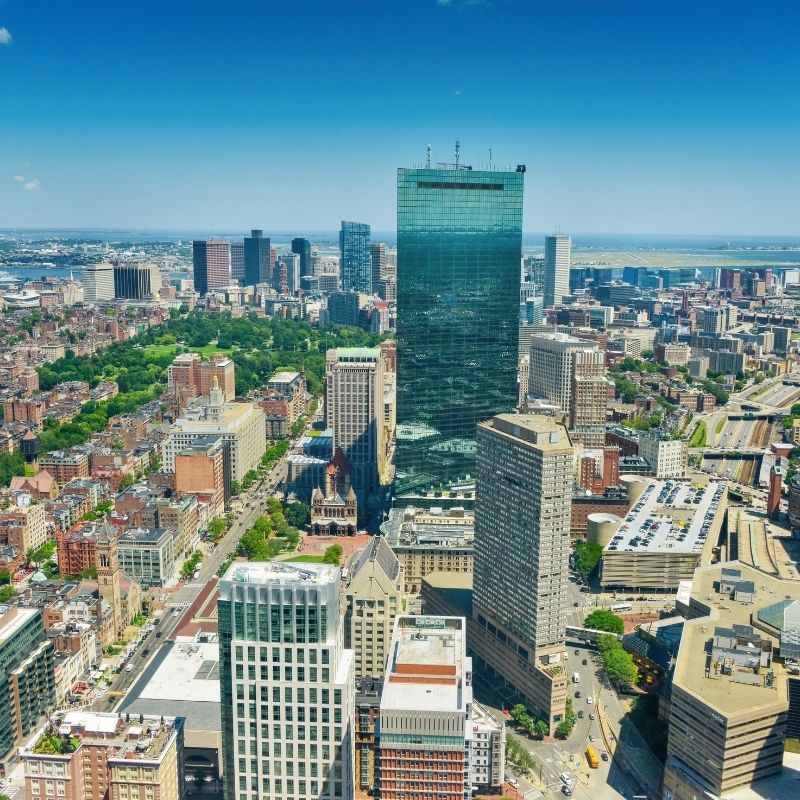
Fines and penalties for BERDO non-compliance can be considerable for building owners:
- Reporting and verification violations: From $150 to $300 per day, depending on the property size
- Emissions standard violations: From $300 to $1000 per day, depending on the property size
- Inaccurate reporting: From $1,000 to $5,000 fine per discrepancy
Alternative Compliance Payments (ACP)
Rather than paying daily fines for exceeding emissions limits, building owners may choose to make an Alternative Compliance Payment (ACP) to the City of Boston, currently set at $234 per metric ton of CO2 above the allowed standard. Depending on the level of excess emissions, this option can be more cost-effective than ongoing penalties.
Owners facing technical or financial constraints may also request flexibility through individual compliance schedules or hardship plans reviewed by the BERDO Review Board.
Fines and penalties for BERDO non-compliance can be considerable for building owners:
- Reporting and verification violations: From $150 to $300 per day, depending on the property size
- Emissions standard violations: From $300 to $1000 per day, depending on the property size
- Inaccurate reporting: From $1,000 to $5,000 fine per discrepancy
Alternative Compliance Payments (ACP)
Rather than paying daily fines for exceeding emissions limits, building owners may choose to make an Alternative Compliance Payment (ACP) to the City of Boston, currently set at $234 per metric ton of CO2 above the allowed standard. Depending on the level of excess emissions, this option can be more cost-effective than ongoing penalties.
Owners facing technical or financial constraints may also request flexibility through individual compliance schedules or hardship plans reviewed by the BERDO Review Board.
Key Compliance Challenges for Building Owners
Navigating BERDO regulations presents substantial challenges that building owners must address strategically.
- Complex reporting requirements and calculations
- Energy performance gaps in older buildings
- Integration of decarbonization measures without disrupting tenants
- Tracking compliance across multiple sites
- Navigating BERDO 2.0 updates and local variations (Newton BERDO, Cambridge BEUDO)
A BERDO consultant can help identify gaps, implement solutions, and ensure compliance ahead of reporting deadlines.
BERDO Consultants in Boston
Our BERDO Compliance Services

At SOCOTEC, we provide trusted expertise from the ground up to help Boston building owners achieve sustainability compliance and building performance efficiently.
- Energy Audits & Emissions Reporting: Accurate measurement of carbon emissions, water usage, and energy efficiency.
- Compliance Strategy & Consulting: Tailored pathways for BERDO 2.0 Boston and BEUDO integration.
- Decarbonization Solutions: Guidance on electrification, building envelope improvements, and sustainability upgrades.
- Experienced Team: SOCOTEC has extensive experience across commercial, industrial, and residential buildings in Boston, Newton, and across Massachusetts.
- End-to-End Support: From initial assessment to reporting and performance improvement, we provide full-service solutions.
- LBER Consulting: Beyond BERDO, we support building owners subject to the Large Building Energy Reporting Policy (LBER), ensuring full compliance with this complementary energy reporting requirement.
At SOCOTEC, we provide trusted expertise from the ground up to help Boston building owners achieve sustainability compliance and building performance efficiently.
- Energy Audits & Emissions Reporting: Accurate measurement of carbon emissions, water usage, and energy efficiency.
- Compliance Strategy & Consulting: Tailored pathways for BERDO 2.0 Boston and BEUDO integration.
- Decarbonization Solutions: Guidance on electrification, building envelope improvements, and sustainability upgrades.
- Experienced Team: SOCOTEC has extensive experience across commercial, industrial, and residential buildings in Boston, Newton, and across Massachusetts.
- End-to-End Support: From initial assessment to reporting and performance improvement, we provide full-service solutions.
- LBER Consulting: Beyond BERDO, we support building owners subject to the Large Building Energy Reporting Policy (LBER), ensuring full compliance with this complementary energy reporting requirement.
Our Approach
SOCOTEC's methodology combines technical rigor with practical implementation focus:
- Comprehensive Assessment: We begin by thoroughly understanding your building's current performance, capital plans, and business objectives
- Data-Driven Strategy: Our team utilizes utility bills and energy modeling to identify optimal compliance pathways
- Integrated Solutions: Rather than isolated measures, we develop coordinated strategies addressing energy, water, and carbon emission reduction holistically
- Phased Implementation: We structure compliance plans to align with equipment replacement cycles, minimizing premature capital expenditure
- Verification & Documentation: Our credentialed professionals ensure reporting accuracy and maintain comprehensive records
For years, we’ve been helping building owners across Boston navigate complex decarbonization challenges, supported by a deep understanding of local regulations and building stock. An experienced energy consultant like SOCOTEC helps translate Boston’s BERDO requirements into practical, phased actions that reduce risk, control costs, and keep buildings compliant over time.
Ready to be Compliant with Boston BERDO?
Discuss with our experts in Boston.
Frequently Asked Questions About BERDO
Sources:
- City of Boston - Building Emissions Reduction And Disclosure: https://www.boston.gov/departments/environment/berdo
- Berdo 101 - Building Emissions Reduction And Disclosure Ordinance: https://www.boston.gov/sites/default/files/berdo/BERDO_Basics.pdf
- Mass.gov - Large Building Energy Reporting Policy: https://www.mass.gov/info-details/large-building-energy-reporting-policy
You may also like




Get the latest updates about SOCOTEC, subscribe to our newsletter!