
Our FEA Expert

How FEA Is Redefining Structural Safety for Longer-Lasting Infrastructure
Fri 05/22/2026 - 22:19
How FEA Is Redefining Structural Safety for Longer-Lasting Infrastructure
As infrastructure across the United States continues to age, owners and operators face increasing pressure to maintain safety, reliability, and operational continuity.
Bridges, tunnels, pipelines, and industrial structures are subjected to decades of loading, environmental exposure, and material degradation. Understanding how these assets behave under stress has become essential to making informed engineering and maintenance decisions.
That's where Finite Element Analysis (FEA) comes in — and it's one of the most powerful tools in the modern structural engineer's arsenal.
In this episode of SOCOTEC’s Trust & Tech video series, Eric Cheifet, Vice President and Principal Engineer at SOCOTEC US, breaks down what FEA is, how it's used, and why it's becoming increasingly critical as infrastructure ages across the United States.


Finite element analysis for safer and longer-lasting infrastructure
Trust & Tech
What Is Finite Element Analysis?
Finite Element Analysis (FEA) is an advanced engineering computational method used to simulate how structures and materials respond to real-world conditions such as loads, pressure, vibration, temperature changes or damage.
Through detailed digital models, engineers can evaluate stress distribution, deformation, potential failure points, and remaining service life of a component. This allows teams to better predict structural performance and optimize maintenance or repair strategies before problems escalate.
Today’s computing power has significantly expanded the capabilities of FEA. Engineers can now develop highly refined simulations with millions of degrees of freedom, incorporating detailed geometry and nonlinear material properties to produce highly accurate results.
A finite element analysis is the analysis of structures under complex loading and how it affects the component. Finite element analysis can also be used for evaluating the fitness of service of structures and the remaining life of some components.
Where FEA Is Applied: Assets, Materials, and Industries
Finite Element Analysis can be applied to a wide range of structures and materials across infrastructure, transportation and industrial sectors.
Structures

Critical Assets
SOCOTEC’s engineers use FEA to evaluate citical assets including:
- Transportation infrastructure: tunnels, bridges, and highway structures
- Energy and utilities: pipelines, storage tanks, pressure vessels
- Civil structures: concrete and steel buildings, retaining walls, foundations
- Industrial assets: components exposed to extreme thermal or mechanical loading
FEA is particularly valuable when assessing structures that may contain flaws, damage or signs of deterioration.
Materials
Materials Behaviors
Different material behaviors can also be modeled with precision, including:
- Nonlinear steel behavior
- Cracking in concrete structures
- Fatigue and fracture propagation
- Thermal and pressure-related stresses
This level of detail allows owners to better understand risk exposure and prioritize repairs or maintenance activities more effectively.
The Role of Fracture Mechanics in Fitness-for-Service Assessments
One of the most critical applications of FEA at SOCOTEC is in fitness-for-service (FFS) assessments.
When flaws, cracks or material degradation are identified, engineers must determine whether the structure can continue operating safely and for how long. This is particularly relevant for pipeline operators, who may discover cracks, corrosion, or other anomalies during inspection. Rather than defaulting to costly shutdowns or replacements, FFS assessments provide a rigorous, data-driven path to a defensible decision.
FFS results feed directly into two complementary approaches:
- Deterministic fracture mechanics: calculating whether a known flaw will propagate under defined loading conditions
- Probabilistic fracture mechanics: accounting for variability in material properties, flaw sizes, and loading scenarios to quantify risk over time
Together, these methods give asset owners not just a snapshot of current condition, but a forward-looking view of structural life and risk evolution.
Not only do we perform the finite element analysis, but we use the results often for deterministic and probabilistic fracture mechanics based fitness-for-service assessments.
Smarter Maintenance
How Detailed Simulations Improve Safety Decisions
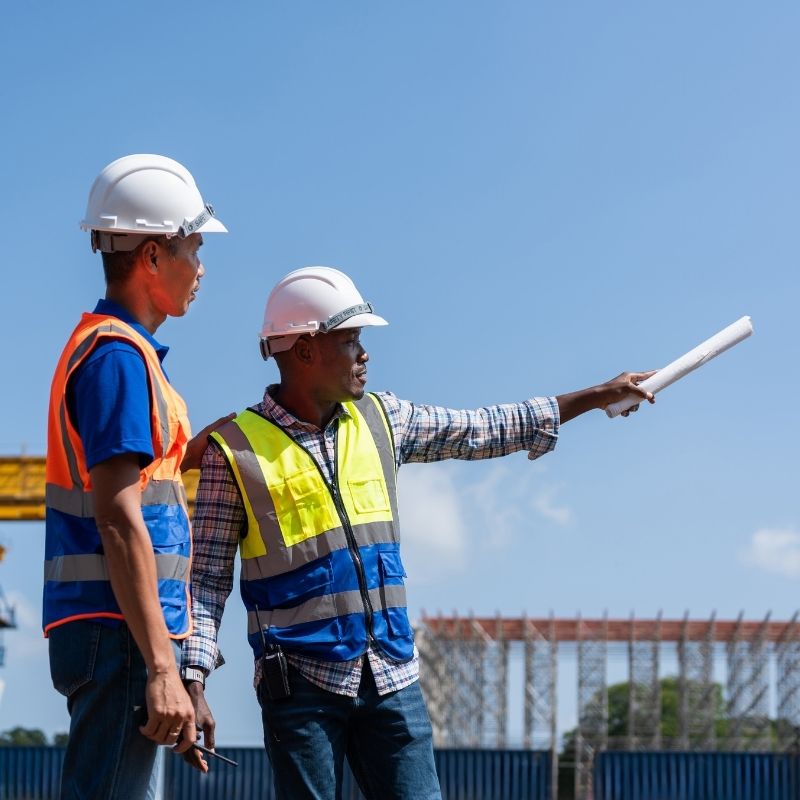
One of the most tangible benefits of FEA is its ability to inform smarter maintenance strategies. Rather than relying on time-based inspection intervals or conservative rule-of-thumb assumptions, clients can use simulation results to:
- Prioritize repairs based on actual stress distribution and flaw criticality
- Extend service life where analysis confirms damaged or deteriorated components and adequate structural margin
- Plan shutdowns strategically, minimizing operational disruption while maintaining safety
- Avoid over-engineering costly interventions where they aren't needed
The computational power behind modern FEA has transformed what's possible. Engineers can now build highly refined models with detailed geometry, nonlinear material properties, and multi-million degree-of-freedom simulations — generating results that are both more accurate and more actionable than ever before.
One of the most tangible benefits of FEA is its ability to inform smarter maintenance strategies. Rather than relying on time-based inspection intervals or conservative rule-of-thumb assumptions, clients can use simulation results to:
- Prioritize repairs based on actual stress distribution and flaw criticality
- Extend service life where analysis confirms damaged or deteriorated components and adequate structural margin
- Plan shutdowns strategically, minimizing operational disruption while maintaining safety
- Avoid over-engineering costly interventions where they aren't needed
The computational power behind modern FEA has transformed what's possible. Engineers can now build highly refined models with detailed geometry, nonlinear material properties, and multi-million degree-of-freedom simulations — generating results that are both more accurate and more actionable than ever before.
The Growing Importance of FEA for Aging Infrastructure
The timing of this capability matters. Infrastructure built decades ago is now reaching — or exceeding — its original design life. At the same time, owners and operators face increasing demands for safety, resilience and cost efficiency.
In this context, the value of rigorous advanced engineering tools like FEA only grows for evaluating existing assets and supporting long-term infrastructure management strategies.
Multidisciplinary Expertise
SOCOTEC’s Approach to Structural Analysis and Engineering

At SOCOTEC, our structural and mechanical engineering teams bring deep expertise in finite element analysis across industries and asset types. Our approach combines:
- Advanced FEA modeling tailored to the specific geometry, loading, and material behavior of each asset
- Fitness-for-service evaluations — both deterministic and probabilistic — aligned with recognized standards (API 579, BS 7910, and others)
- Structural analysis, fracture mechanics assessments and failure analysis
- Practical, client-focused outputs that translate complex simulations into clear, defensible decisions
These advanced simulations support data-driven engineering decisions for clients managing critical infrastructure and complex assets. Our structural engineers serve clients in energy, oil and gas, transportation agencies, port authorities, civil infrastructure and industrial operators across the United States — from pipeline integrity evaluations in the field to structural assessments of critical urban infrastructure.
Our mission is straightforward: provide the precise, trusted analysis that helps clients operate safely, efficiently, and with confidence in the long-term durability of their assets.
At SOCOTEC, our structural and mechanical engineering teams bring deep expertise in finite element analysis across industries and asset types. Our approach combines:
- Advanced FEA modeling tailored to the specific geometry, loading, and material behavior of each asset
- Fitness-for-service evaluations — both deterministic and probabilistic — aligned with recognized standards (API 579, BS 7910, and others)
- Structural analysis, fracture mechanics assessments and failure analysis
- Practical, client-focused outputs that translate complex simulations into clear, defensible decisions
These advanced simulations support data-driven engineering decisions for clients managing critical infrastructure and complex assets. Our structural engineers serve clients in energy, oil and gas, transportation agencies, port authorities, civil infrastructure and industrial operators across the United States — from pipeline integrity evaluations in the field to structural assessments of critical urban infrastructure.
Our mission is straightforward: provide the precise, trusted analysis that helps clients operate safely, efficiently, and with confidence in the long-term durability of their assets.
Trust & Tech is a video series where SOCOTEC experts share insights on how technical innovation and trusted expertise are shaping the future of the built environment.
Ready to Evaluate Your Critical Infrastructure?
You may also like


Get the latest updates about SOCOTEC, subscribe to our newsletter!