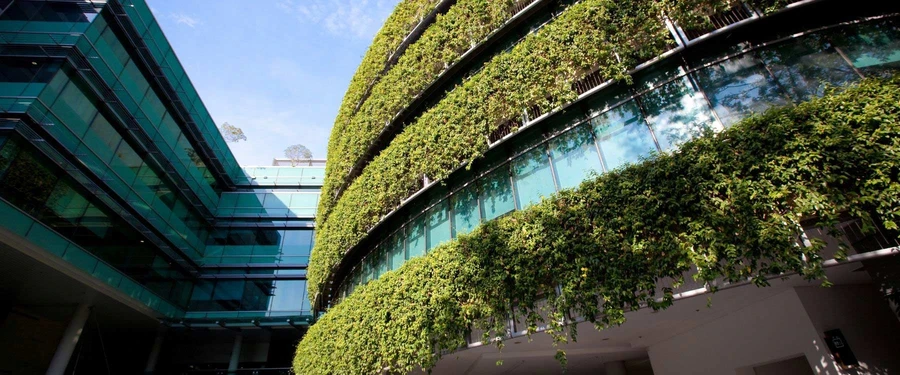

Bard College Student Residences, NY
SOCOTEC provided Building Envelope, Energy Modeling and Passive House consulting from schematic design through completion, helping Bard College deliver four Passive House-designed residence halls in Annandale-on-Hudson.
Key Information
- Project name: Bard College Student Residences
- Client: Bard College
- Location: 33 Robbins Road, Annandale-on-Hudson, NY
- Services provided: Building Envelope Consulting, Energy and Sustainability Consulting, Passive House Consulting, Energy Modeling

Talk to our experts

The Challenge
Achieving Passive House Performance Within a Demanding Campus Project
Bard College set out to increase student housing capacity while setting a new sustainability benchmark on campus. The North Campus residence halls support the college's goal of carbon neutrality by 2035.
The project comprises:
- Four new Passive House residence halls
- A central "head house"
- Accommodations for more than 400 students.
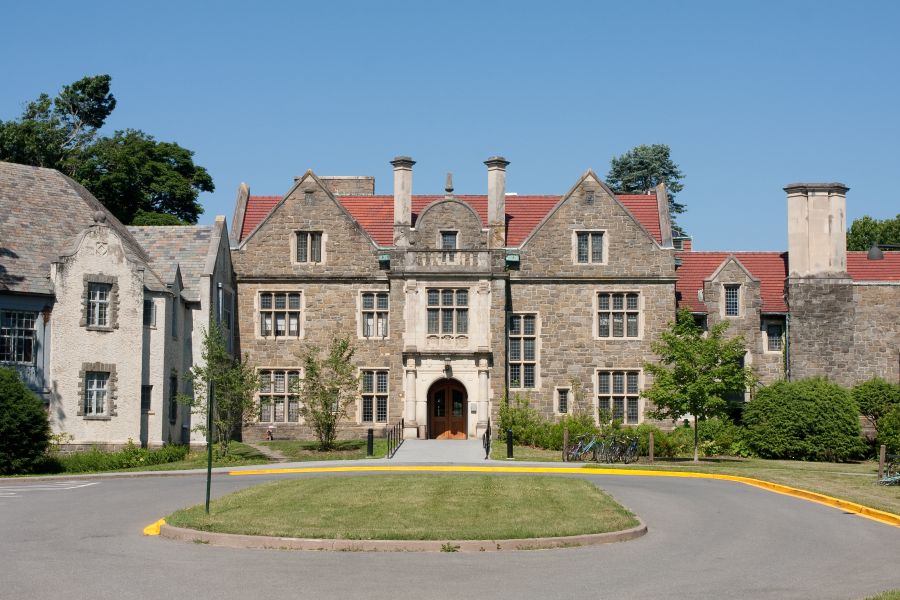
The residence halls are wood-framed, the head house uses structural steel, and all five buildings feature a traditional masonry façade with triple-glazed uPVC windows and curtain wall.
Passive House certification is technically demanding. It requires near-perfect airtightness and careful control of thermal bridging. Construction added further pressure: cold-weather months complicated masonry installation, and a limited pool of skilled workers meant complex Passive House details needed close oversight to ensure compliance.
The Solution
Integrated Envelope, Energy and Passive House Consulting
From 2023 through 2026, SOCOTEC acted as the technical backbone for the envelope and energy strategy, working with the college, DBI Projects and architect Kohn Pedersen Fox from Schematic Design through Final Completion.
Our team provided:
- Passive House consulting and PHPP modeling: SOCOTEC led PHPP modeling and submission support to establish performance targets aligned with Passive House standards.
- Thermal bridge analysis: Detailed 2-D and 3-D thermal bridge modeling helped assess critical envelope transitions and optimize insulation continuity.
- Condensation analysis: 2-D condensation analysis was performed to evaluate moisture risk at key building envelope assemblies.
- Energy modeling and performance analysis: Whole-building modeling supported the evaluation and refinement of energy performance strategies.
- Building envelope consulting: Our team guided the design of a highly insulated and airtight envelope incorporating brick masonry veneer over wood framing, uPVC triple-glazed windows, and TPO roofing systems.
- Shading analysis and 3-D modeling: Modeling and shading studies supported decisions affecting envelope and energy performance.
- Airtightness testing: Whole-building blower door testing was conducted to verify airtightness and assess compliance with Passive House performance thresholds.
- Envelope interface detailing: SOCOTEC focused on the connection between masonry and uPVC window systems to address airtightness, thermal bridging, condensation, and energy loss.
From 2023 through 2026, SOCOTEC acted as the technical backbone for the envelope and energy strategy, working with the college, DBI Projects and architect Kohn Pedersen Fox from Schematic Design through Final Completion.
Our team provided:
- Passive House consulting and PHPP modeling: SOCOTEC led PHPP modeling and submission support to establish performance targets aligned with Passive House standards.
- Thermal bridge analysis: Detailed 2-D and 3-D thermal bridge modeling helped assess critical envelope transitions and optimize insulation continuity.
- Condensation analysis: 2-D condensation analysis was performed to evaluate moisture risk at key building envelope assemblies.
- Energy modeling and performance analysis: Whole-building modeling supported the evaluation and refinement of energy performance strategies.
- Building envelope consulting: Our team guided the design of a highly insulated and airtight envelope incorporating brick masonry veneer over wood framing, uPVC triple-glazed windows, and TPO roofing systems.
- Shading analysis and 3-D modeling: Modeling and shading studies supported decisions affecting envelope and energy performance.
- Airtightness testing: Whole-building blower door testing was conducted to verify airtightness and assess compliance with Passive House performance thresholds.
- Envelope interface detailing: SOCOTEC focused on the connection between masonry and uPVC window systems to address airtightness, thermal bridging, condensation, and energy loss.
The Results
A Passive House-Certified Campus Community
The Bard College Student Residences are now a Passive House-certified student housing complex, giving the campus new housing for more than 400 students. The head house also complies with the New York State Stretch Code.
Combined with geothermal-powered heat pump systems, the highly insulated and airtight envelopes deliver ultra-high energy efficiency and occupant comfort.
Our modeling, detailing and testing kept the team focused on measurable performance throughout design and construction. The result supports Bard College's carbon neutrality goal for 2035 and its institutional sustainability mandates, while building long-term campus resilience.
Planning a High-Performance Campus Building?